
Fiberglass vs concrete vs vinyl
Why a composite fiberglass pool?
Fiberglass pools install faster, cost less to maintain, and hold up better through Ohio winters than concrete or vinyl-liner pools. Here is an honest look at why, and the one real trade-off you should know about.
A pool built in a factory, not your yard.
A composite fiberglass pool is a one-piece shell built in a controlled factory environment, then delivered and set into an excavated hole in your yard. The shell is made from layers of fiberglass and composite materials, finished with a smooth gelcoat surface that is hard, non-porous, and ready to hold water the day it lands.
Nothing is formed or cured on your property. The pool arrives as a finished product. That single fact drives most of the advantages: faster install, smoother surface, and no on-site variables in the construction quality.
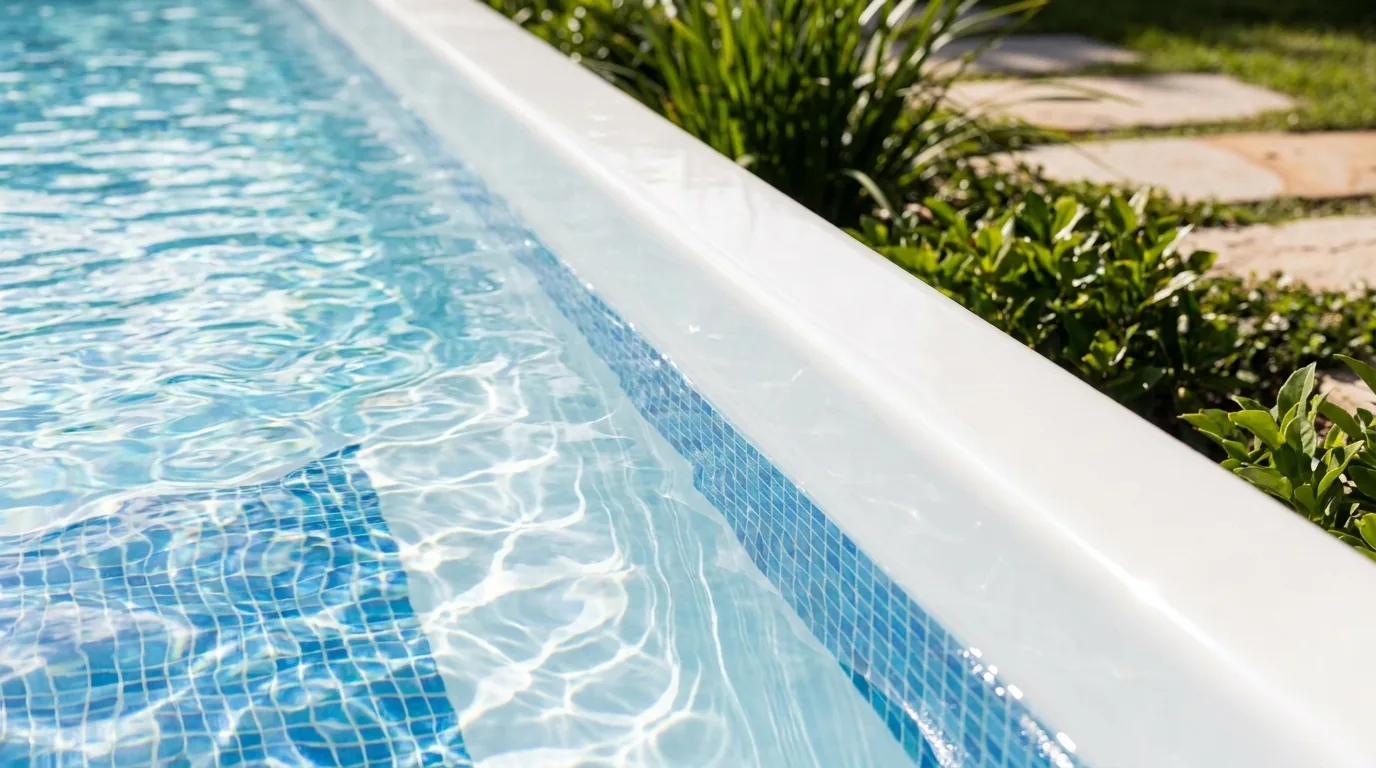
The gelcoat finish is what you swim against. It is smooth to the touch, does not harbor algae the way plaster does, and holds up to salt systems and Ohio's mineral-heavy water without degrading.
The shell is manufactured in controlled conditions, not poured on site.
No seams, no liner joins, no joints that can leak or peel.
Smooth, non-porous, and finished before it ever enters the ground.
Delivery truck and crane set the shell in the hole. The hard part is done.
Six reasons Ohio homeowners choose fiberglass.
Each of these comes directly from how the pool is built. A factory shell behaves differently from concrete poured in your backyard or a vinyl liner stretched over a steel frame.
Durable by design
The fiberglass shell flexes rather than cracks under pressure, which matters in Ohio ground that heaves and settles with freeze-thaw cycles. The surface does not chip, peel, or require resurfacing the way plaster does.
Fast installation
The shell is set in a single day. Most fiberglass pools are complete and swim-ready in two to four weeks. A comparable concrete pool routinely takes two to three months because the shell must be formed and cured on site.
Low ongoing maintenance
The smooth gelcoat surface does not absorb algae or stain the way plaster does. You use fewer chemicals, scrub less, and spend less time managing water chemistry. Most fiberglass pool owners report noticeably lower supply costs than their neighbors with plaster pools.
Comfortable surface
Plaster and concrete surfaces roughen over time and can be hard on feet and forearms. Fiberglass gelcoat stays smooth for decades. Kids and dogs are noticeably less likely to scrape themselves climbing in and out.
Salt-system friendly
The gelcoat surface is compatible with saltwater chlorination systems. Salt does not degrade fiberglass the way it can break down plaster over time. If you want a salt system, fiberglass is a straightforward choice.
Lower chemical costs
The non-porous gelcoat surface means the water chemistry stays stable more easily. Fiberglass pool owners consistently use less chlorine and fewer balancing chemicals than owners of plaster pools, where the porous surface constantly absorbs and affects the water.
Fiberglass vs concrete vs vinyl.
The three inground pool types look similar once the decking is done. The differences are in how they are built, what they cost to run, and how they hold up over time.
| Feature | Fiberglass | Concrete (Gunite) | Vinyl Liner |
|---|---|---|---|
| Install time | 2 to 4 weeks. Shell set in 1 day. | 2 to 3 months. Formed and cured on site. | 2 to 6 weeks. Frame built on site, liner stretched. |
| Ongoing maintenance | Low. Smooth surface resists algae and staining. Fewer chemicals. | High. Porous plaster needs regular brushing, acid washing, and more chemicals. | Moderate. Liner must be kept clean and balanced to avoid brittleness. |
| Surface feel | Smooth gelcoat. Comfortable for bare feet and skin. | Rough texture. Can abrade skin over time, especially as plaster ages. | Smooth initially, but liners become brittle and rough as they age. |
| Resurfacing or liner replacement | None required. Gelcoat does not need resurfacing under normal conditions. | Re-plaster every 10 to 15 years. Significant cost. | Replace the liner every 5 to 12 years, at significant cost. |
| Freeze-thaw durability | Good. Shell flexes with ground movement instead of cracking. | Can crack if water inside freezes or ground shifts. | Liner can crack or tear in sustained cold. Frame can shift. |
| Typical lifespan | 30 to 50 years for the shell. No structural replacement needed. | 50 or more years for the structure, but surface requires repeated renewal. | Structure can last decades, but liners need replacement every 5 to 12 years. |
Installation times and lifespans are general industry estimates. Your site, soil, and climate affect actual results.
Built for freeze-thaw ground.
Ohio ground freezes and thaws every winter. That movement stresses a pool structure in ways that a stable-climate pool never faces. Concrete pools can crack when the water inside freezes or when the surrounding soil shifts. Vinyl liners can become brittle and tear in extended cold.
Fiberglass handles this differently. The shell has some flex in it, so when the ground moves, the structure moves with it rather than cracking against it. After the thaw, the shell returns to its original shape.
The smooth gelcoat surface also resists the staining and etching that comes from Ohio's hard water and from road salt runoff finding its way into the water chemistry. A plaster surface absorbs minerals and shows scale and staining far more visibly over time.
Properly closed for winter, a fiberglass pool stays full through the season. You lower the water level slightly, add winter chemicals, and fit a solid cover. The shell sits through the cold without cracking, and you reopen in spring without structural repairs.
Shell flexes, not cracks
The composite material has enough flex that ground movement does not fracture the structure.
Hard water resistant
The non-porous gelcoat does not absorb minerals the way plaster does, so scale and staining are much less of a problem.
Closes full through winter
No need to drain for the season. Keep it full with the right water level and chemistry, and fit a solid winter cover.
Ready to reopen in spring
Remove the cover, bring chemistry back into range, and you are back in the water. No structural inspection required.
What fiberglass cannot do.
Fiberglass is the right pool for most Ohio homeowners, but it is not the right pool for every situation. Here is a clear picture of the real constraints so you can decide with full information.
Shapes are fixed by the mold
A fiberglass pool comes in the shape it was manufactured in. You cannot request a fully custom design the way you can with a poured concrete pool. We carry 45 models across rectangle and freeform shapes, which covers most backyard situations, but if you need something bespoke, concrete is the only option.
Width tops out near 16 feet
Most fiberglass shells max out at around 16 feet wide. This is a practical limit of what can be manufactured in one piece, transported by truck, and set by crane. If you have a large property and want a pool wider than that, concrete is the alternative. For most residential yards, 16 feet wide is plenty.
Delivery access required
A one-piece shell arrives by flatbed truck and is lowered into position by crane. Your property needs a clear route from the street to the dig site wide enough for the truck and adequate clearance overhead. We check access during the site visit before quoting. Most yards work fine, but fenced or tightly landscaped lots occasionally need planning.
Fiberglass pool questions, answered.
Still unsure? Call (614) 591-7753 and we will talk it through.
What is a composite fiberglass pool?
How long does it take to install a fiberglass pool compared to a concrete pool?
Do fiberglass pools hold up to Ohio winters?
What are the limitations of a fiberglass pool?
Are fiberglass pools compatible with saltwater systems?
See what fits your yard.
Browse all 45 models by shape and size, or read about how we handle the installation from start to swim.
Ready to see what fits your yard?
Tell us about your space and what you are looking for. We will help you find the right model and send a fixed quote, with no obligation.